The Fast and the Furious (2001) — The Start of a Legacy Built on Speed and Loyalty

Film Information
Title: The Fast and the Furious
Director: Rob Cohen
Studio: Universal Pictures
Release Year: 2001
Genre: Action, Crime, Thriller
Duration: 106 minutes

The Fast and the Furious introduces us to the gritty, high-octane world of Los Angeles street racing. The story follows Brian O'Conner (Paul Walker), a young undercover LAPD officer tasked with infiltrating a crew of street racers suspected of hijacking semi-trucks to steal expensive electronics.
Brian sets his sights on Dominic Toretto (Vin Diesel), the charismatic and intimidating leader of the local racing scene. To get close to Dom, Brian builds a souped-up Mitsubishi Eclipse and tries to prove his worth behind the wheel. In the process, he finds himself deeply entrenched in Dom’s world—bonding with the crew and falling in love with Dom’s sister, Mia (Jordana Brewster).
As the investigation heats up and the rivalry with a competing gang leader, Johnny Tran, escalates, Brian faces a difficult moral dilemma. He finds himself torn between his duty as a police officer and his growing loyalty to Toretto, leading to a climax where he must choose between the law and the "family" he has found.
Looking back at The Fast and the Furious today, it is fascinating to see how grounded the franchise began. Before the tanks, submarines, and space travel of the later sequels, this film was simply about street racing, petty crime, and the bond between two men from different sides of the law.
The film is essentially a retelling of Point Break with cars, but it works incredibly well thanks to the undeniable chemistry between Vin Diesel and Paul Walker. Diesel’s portrayal of Dominic Toretto is commanding; he establishes the code of honor and "family" that would become the franchise's trademark. Walker brings a likable, eager energy that balances Diesel’s intensity perfectly.
Visually, the movie is a time capsule of the early 2000s. From the neon underglow lights and flashy decals to the Nu-Metal soundtrack, it captures the "tuner" car culture that exploded in popularity during that era. The racing scenes, while exaggerated with CGI nitrous boosts, rely heavily on practical stunts, giving the action a raw and dangerous feel that is often missing in modern blockbusters.
While the plot is predictable, the film succeeds because it prioritizes character dynamics over complex storytelling. It makes you care about the racers, making the stakes feel personal rather than just a spectacle of destruction.
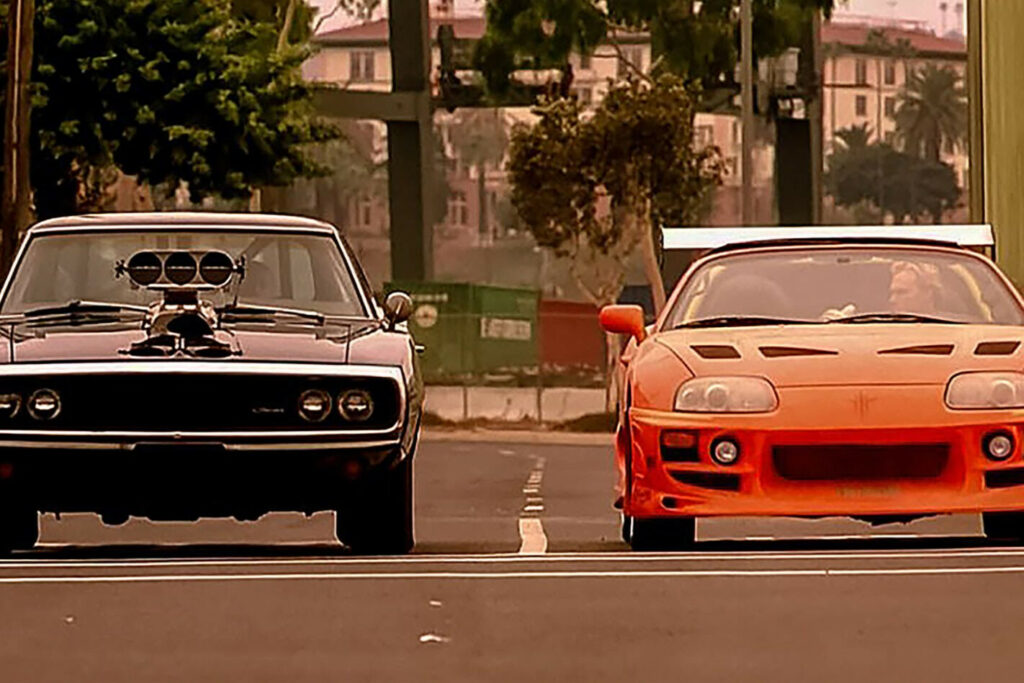
The Fast and the Furious is the spark that ignited a global phenomenon. It is a thrilling, adrenaline-fueled ride that celebrates American muscle and Japanese import culture in equal measure.
For fans of the later movies, revisiting this original chapter is a reminder of the franchise's humble roots. It offers a simpler, more intimate story where the cars were the stars and the stakes were about freedom, not saving the world.
In short, this is the film that taught us the most enduring lesson of the series: it doesn't matter if you win by an inch or a mile—winning is winning.
Comments
Post a Comment